AI Demo Screening for Indie Labels: How to Find the Winners Before Ear Fatigue Kills Your Judgment
Learn how indie labels use AI demo screening to filter submissions, beat ear fatigue, and identify high-potential tracks without replacing human A&R judgment.
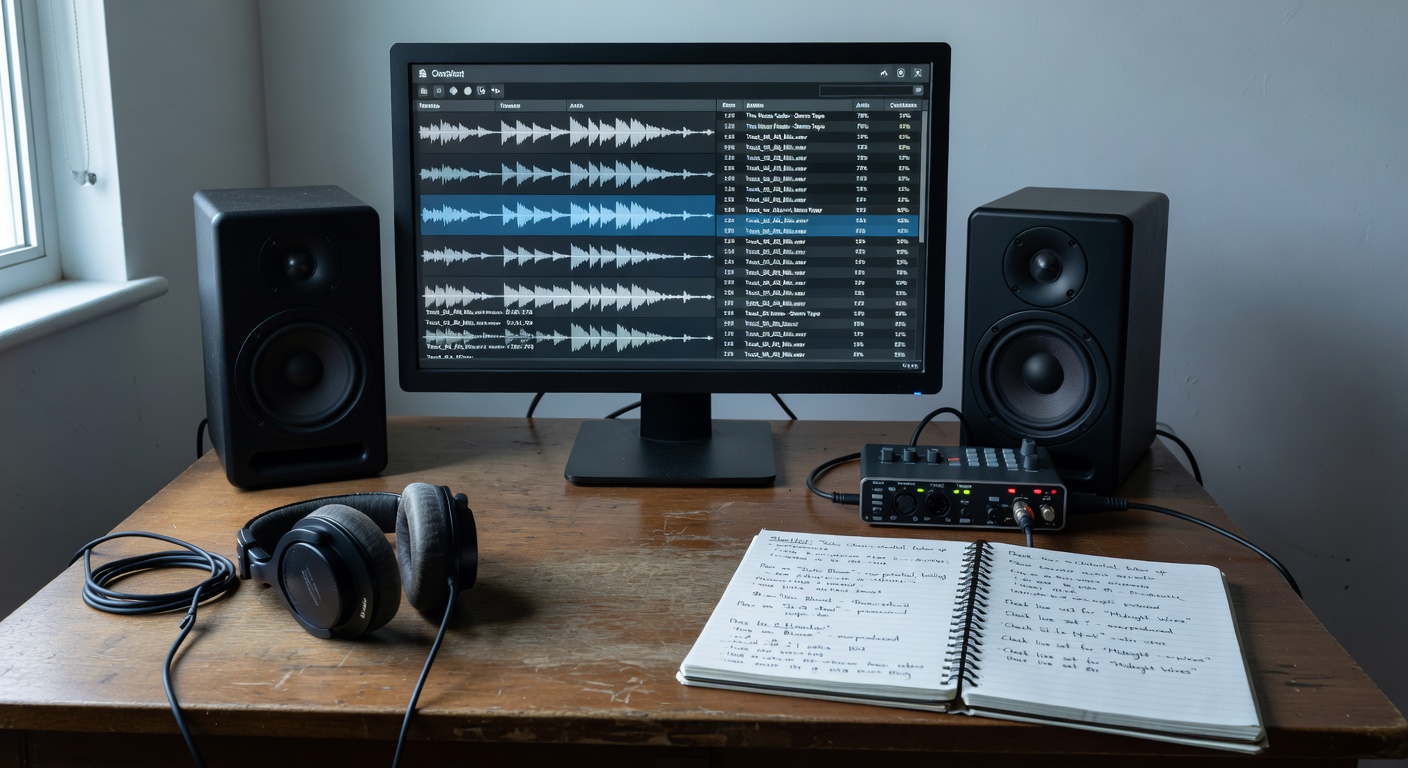
The Prerequisites for AI-Assisted A&R
Before an indie label can effectively implement AI demo screening, certain operational foundations must be in place. AI is a multiplier, not a magic wand. If your label lacks a structured intake process, adding an A&R decision support tool will only digitize your chaos.
First, you need a minimum submission volume to justify the tooling. If you receive fewer than 10 demos a month, human review is sufficient. However, as independent labels now face acceptance rates of roughly 1 in 50 [1.6], processing hundreds of submissions requires systematic filtering. You also need a defined demo intake workflow—whether that is a dedicated email portal, a submission form, or a platform like LabelRadar.
Second, your team must have a clear understanding of your target genre and market fit. AI tools evaluate tracks based on the parameters you set. If your signing criteria are vague, the AI's output will be equally unfocused. Familiarity with basic streaming analytics is also essential, as you will need to interpret data points like skip risk and retention curves.
Crucially, you must understand what not to assume. AI demo screening should never be expected to replace human taste. It cannot measure the cultural relevance of an artist's backstory or the raw charisma of a live performance. Its sole purpose is to act as a first-pass filter, surfacing candidates that are sonically and structurally worth your team's deeper listening time.
Core Concepts of AI Demo Screening
To use music analytics for labels effectively, A&R teams must grasp the fundamental principles of how these algorithms evaluate music.
1. Audio Feature Analysis
AI demo screening tools do not "listen" to music the way humans do. They extract the audio DNA of a track, analyzing acoustic features like tempo, key, spectral energy, vocal presence, and structural markers such as hook timing and drop placement. These features are then correlated with historical data from commercially successful tracks to predict listener retention.
2. Acoustic Fit vs. Market Timing
There is a distinct difference between a track sounding good (acoustic fit) and a track being right for the current market (market timing). Predictive analytics for music combines both, evaluating whether a song's sonic profile aligns with emerging audience demands and streaming trends.
3. Comparison Groups
Advanced A&R software doesn't just score a track in a vacuum. It uses comparison groups—contextual benchmarks of reference tracks—to evaluate how a demo stacks up against specific competitors or genre standards. This provides a relative score rather than an absolute one.
4. Augmentation Over Replacement
The most critical concept is that AI augments human judgment. Ear fatigue is a documented physiological and cognitive phenomenon that degrades decision quality after just two to three hours of critical listening. By the 50th demo of the day, a human A&R rep is highly likely to skip a potential hit. AI doesn't suffer from ear fatigue, ensuring every track gets an objective baseline evaluation.
5. First-Pass Triage
In a modern A&R pipeline, AI serves as the triage layer. It handles the initial sorting, eliminating the bottom 80% of submissions that lack commercial viability or genre fit, leaving the top 20% for the final-round evaluation where human emotion, cultural context, and gut instinct take over.
Practical Application in Your Label Workflow
Integrating AI demo screening into a real-world indie label workflow requires a structured cadence. For a small label team of two to four people, the goal is to batch-process submissions to maximize efficiency.
A practical starting point is utilizing a tool like NextHit's Studio Subscription. Priced at $29.99/month, it provides 25 track analyses and 5 comparison groups, making it the ideal accessible entry point for systematic label-scale screening.
Setting Up the Workflow
Instead of listening to demos as they trickle into the inbox, designate one day a week for batch screening. Upload the week's top submissions into NextHit. Define your reference tracks carefully to build your 5 comparison groups. If you are scouting for a melodic techno release, your comparison group should consist of recent top-performing tracks in that specific subgenre, not broad electronic hits.
Interpreting the Output
When the AI generates its reports, focus on the core metrics. Look at the Hook Score (the likelihood listeners stay past the first 10 seconds) and the Hold Score (average engagement throughout the track). Since over 30,000 new tracks are skipped in the first 10 seconds on DSPs daily, a high Hook Score is a strong indicator of streaming viability. Use these scores to create a shortlist of 3 to 5 tracks for the team to listen to with fresh ears.
Communication and Integration
When communicating AI-assisted decisions to artists, transparency is key. Frame the feedback constructively. Instead of saying "the AI rejected your track," explain that the track's structural pacing or hook placement didn't align with the label's current streaming benchmarks. Finally, log all screening data into your CRM or A&R decision log. Tracking both the AI scores and the human decisions builds a valuable historical database for your label.
Advanced Techniques for Sophisticated A&R
Once your label has mastered the basics of how to screen music demos at scale, you can leverage advanced strategies to gain a competitive edge.
- Predictive Micro-Trend Alignment: Use predictive analytics for music to identify micro-trends before a genre peaks. By analyzing the sonic attributes of tracks that are just beginning to gain traction on platforms like TikTok, you can screen your demo inbox for unreleased music that matches those exact acoustic profiles, allowing you to sign the trend rather than chase it.
- Custom Comparison Libraries: Sophisticated users build custom comparison group libraries tailored to different roster slots. The sonic requirements for a lead single designed for Spotify's New Music Friday are vastly different from an album deep cut meant for a niche mood playlist. Tailoring your comparison groups in NextHit ensures you are evaluating the demo against the right benchmark.
- Cross-Referencing Signals: Never rely on a single data point. Cross-reference your AI screening scores with social listening data, playlist curator signals, and early engagement metrics. A track with a high AI Hook Score and accelerating social momentum is a high-conviction signing target.
- Historical Scoring Databases: Develop an internal database tracking how AI predictions correlate with actual release outcomes over time. If tracks that score above an 80 on your AI tool consistently hit their first-month streaming targets, you can confidently allocate larger marketing budgets to future high-scoring demos.
- Scaling Up: As your indie operation grows beyond the 25-track limit of the Studio Subscription, you will need to prepare for enterprise-tier tools. While NextHit's A&R and Labels tier is currently waitlisted, building a disciplined, data-driven culture now ensures your team will be ready to deploy roster-wide, automated screening when enterprise capacity becomes available.
Expert Tips from the Frontlines
Music data scientists and veteran indie label founders have learned hard lessons about integrating A&R software. Here is what the experts recommend:
Avoid the Biggest Mistake
The single biggest mistake labels make when adopting AI screening is treating the algorithm's score as gospel. AI is highly susceptible to genre bias, often favoring heavily processed, quantized tracks while penalizing intentional lo-fi aesthetics or raw, unpolished recordings. Human override is essential when evaluating genres that rely on imperfection and vibe.
Maintain Creative Instinct
Use data as a guardrail, not a steering wheel. If your gut tells you a track is a hit because of a unique vocal delivery, but the AI scores it poorly due to an unconventional structure, trust your gut. The best A&R decisions often happen at the margins where algorithms fail to quantify human emotion.
Build Internal Buy-In
A&R purists often distrust algorithms. To build buy-in, run blind tests. Have your team evaluate a batch of past releases alongside their AI scores. When the team sees that the AI accurately predicted the skip rates of their underperforming tracks, they will begin to view the tool as a helpful assistant rather than a threat to their jobs.
What the Best Labels Do Differently
The most successful indie labels using music analytics don't use AI to find perfect songs; they use it to find perfectible songs. They look for tracks with incredible raw materials—a high Hook Score or a unique vocal timbre—and use the AI's structural feedback (e.g., "Move chorus 6 seconds earlier") to guide the artist through the final production tweaks.
Frequently Asked Questions
What is AI demo screening?
AI demo screening is the use of machine learning algorithms to analyze the acoustic features and structural pacing of unreleased music. It helps A&R teams filter large volumes of submissions and identify tracks with high commercial potential before human review.
Does AI replace human A&R reps?
No. AI demo screening is designed to augment human judgment, not replace it. It acts as a first-pass filter to eliminate low-signal tracks, saving A&R teams from ear fatigue so they can apply their creative taste to the best candidates.
How much does A&R software for indie labels cost?
Pricing varies, but accessible entry points exist for independent labels. For example, NextHit's Studio Subscription costs $29.99 per month, which includes 25 track analyses and 5 comparison groups, making it affordable for small teams.
What audio features do AI screening tools analyze?
These tools analyze a track's acoustic DNA, including tempo, key, spectral energy, vocal presence, hook timing, and drop placement. They compare these features against historical data from successful tracks to predict listener retention and skip risk.
Sources & References
- DropTrack - The Ultimate Guide to Record Labels Accepting Demos: Everything You Need to Succeed in 2026
- YouTube - How to Send Demos to Record Labels (Industry Standard Guide 2026)
- A Journal of Musical Things - Latest stat: 106000 new tracks are uploaded to streaming platforms EVERY DAY
- NextHit - nextHIT BETA
- NextHit - The Fundamentals | nextHIT - AI Analysis for Unreleased Music
- NextHit - Pricing - AI Music Analysis Starting at $7.99
About the Authors

Jain Yagi
Founder
AI ghostwriter
(finally, a collaborator who doesn't ask for publishing splits)