Music Validation Before Release: The Missing Intelligence Layer
Beyond checklists: Why 80% of releases fail despite perfect technical validation. Discover the intelligence gap in music validation workflows.
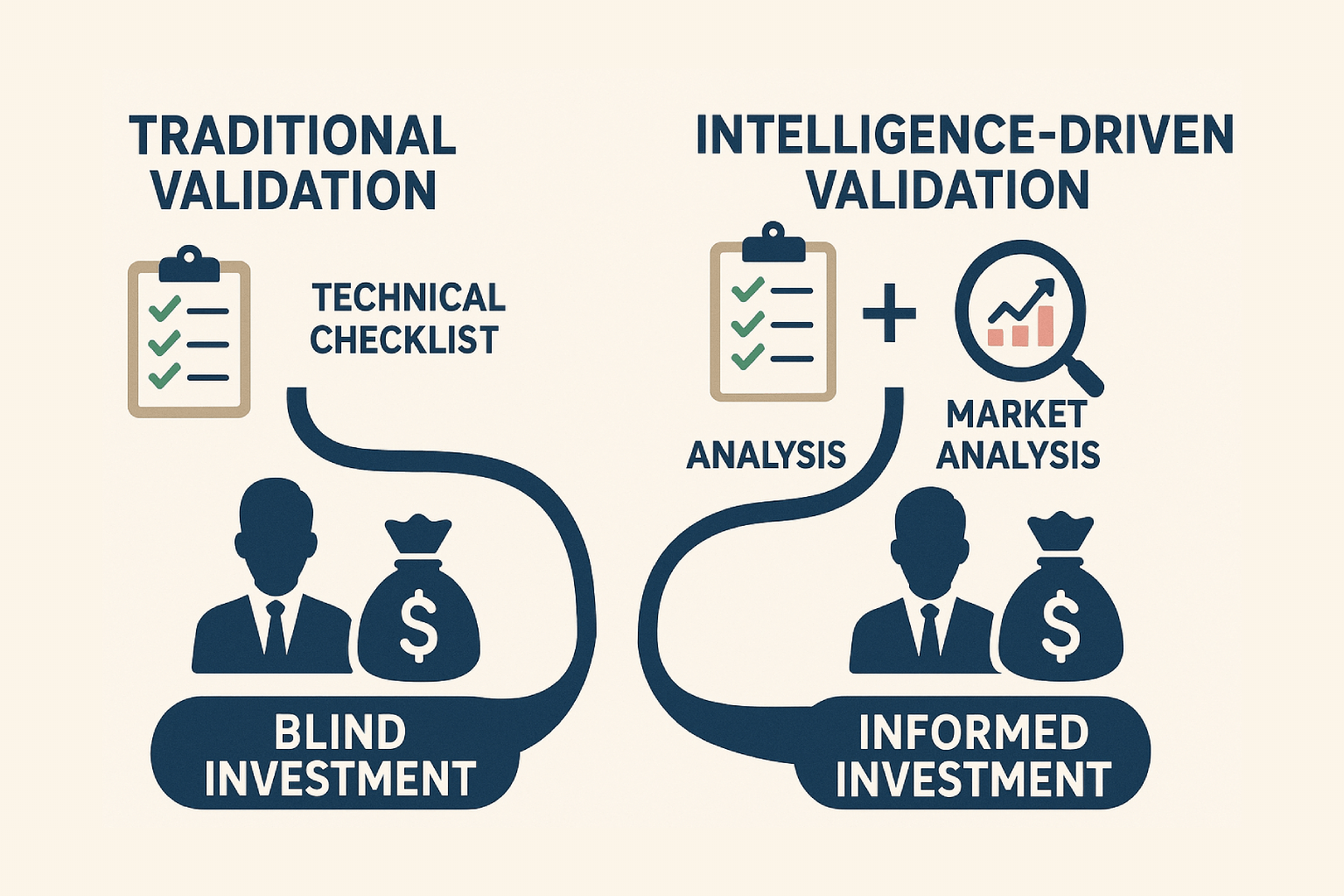
TL;DR
Current music validation focuses on technical checklists while 80% of releases still fail to recoup investment. You're about to spend $200-$42,000 promoting your release, but the validation advice out there never answers the crucial question: should you actually invest in THIS track? The missing layer is market intelligence that reveals how your art will resonate before you spend.
You're about to spend thousands promoting your next release. Your audio files are mastered perfectly. Your metadata is pristine. Your artwork meets every platform specification. You've followed every validation checklist available online.
But here's the brutal question no one's asking: should you actually invest your money in promoting THIS track?
Current Validation: Preparing to Spend Blind
The "music validation before release" advice everyone follows covers three essential areas, but misses the most critical one. Let's break down what current validation actually validates:
Technical Validation ensures your files distribute correctly. Your WAV files are 16-bit, 44.1 kHz. Your metadata includes accurate artist credits and ISRC codes. Your cover art is 3000x3000 pixels. Perfect. You're ready to get your music on platforms.
Content Validation protects you from legal issues. You've cleared any samples. You've confirmed your composition rights. You've credited all contributors properly. Excellent. You won't get sued or face takedown notices.
Promotional Validation follows industry best practices. You've planned your 30-day pre-release timeline. You've created playlist submission strategies. You've outlined your social media campaign. Great. You're following the proven playbook.
But none of this answers the $200 - $42,000 question: "Will this creative work actually connect with listeners?"
The Missing Intelligence Layer
Here's what's NOT being validated before you commit your budget:
Listener Connection - How will this resonate with people who hear it? Current validation assumes your finished track will engage audiences, but 24% of listeners skip within the first 5 seconds. 42% of listeners skip within the first 30 seconds. Wouldn't you want to know if your track creates immediate connection or immediate abandonment?
Artistic Impact - Will this track communicate what you're trying to express? You've poured creative energy into this work. Market intelligence helps ensure your artistic vision actually reaches and moves people, rather than getting lost in the 99,000 daily uploads.
Market Reception - How might audiences respond to this creative vision? You have multiple finished tracks ready. Which ones deserve your limited promotional budget? Which creative expressions have the strongest chance of finding their intended audience?
The current approach is like a restaurant owner who validates their health permits and ingredient sourcing, then chooses which dish to feature as their signature special by throwing darts at a menu board.
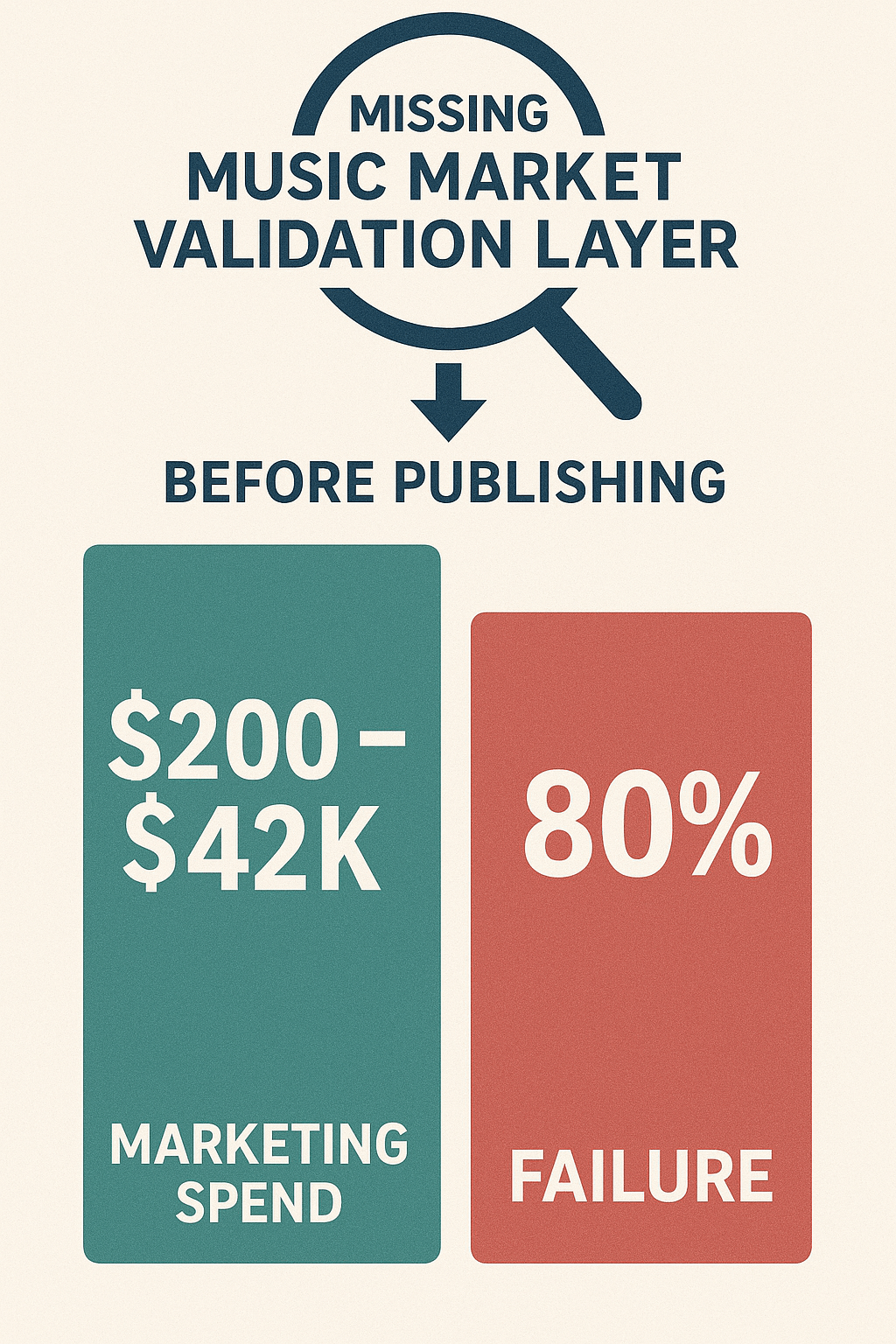
The Investment Reality
| Traditional Validation | Market Intelligence |
|---|---|
| Audio Quality: ✓ Validated | Listener Engagement: ? Unknown |
| Metadata Accuracy: ✓ Validated | Skip Risk: ? Unknown |
| Artwork Specs: ✓ Validated | Commercial Viability: ? Unknown |
| Legal Clearances: ✓ Validated | Audience Resonance: ? Unknown |
| Investment Decision: Blind | Investment Decision: Informed |
The brutal math: Independent artists spend $200-$10,000 per release on marketing campaigns. Major labels invest up to $2.58 million per artist in development and promotion. Yet 87% of tracks receive fewer than 1,000 streams annually.
This isn't a creativity problem. This is an intelligence problem.
Why the Gap Exists
Current validation evolved during music's scarcity era. When only a few hundred releases happened monthly, technical compliance and legal clearance were the primary barriers. Record labels had A&R departments that provided market intelligence through industry relationships and insider knowledge.
Today's abundance environment changes everything. With 99,000 tracks uploaded daily, the barriers aren't technical or legal. They're attention and connection. Your perfectly validated track enters a battlefield where 42% of listeners skip within 30 seconds as of July 2025 if the music doesn't immediately resonate.
The tools evolved for distribution efficiency, not market intelligence. We can get music to every platform on Earth; we can create a pre-save link and share, but we still release blindly into audiences we don't understand.
The Intelligence Solution
Pre-release market validation represents the logical evolution of music workflows. Just as beta testing revolutionized software development and focus groups transformed product launches, music needs its own market research layer.
This isn't about changing your art. It's about choosing which finished tracks deserve the investment. You've got multiple songs ready. Market intelligence helps you identify which creative expressions have the strongest potential to connect with their intended audiences.
Think of it as artistic optimization rather than artistic compromise. A novelist might write three different openings for their book, then test which one most effectively draws readers into the story they want to tell. The story remains authentic; the execution becomes more effective.
Why This Intelligence Layer Matters
For Creative Expression: Your art deserves to reach the people who will truly connect with it. Market intelligence helps ensure your creative vision finds its intended audience rather than disappearing into the streaming void.
For Career Sustainability: Every promotional dollar spent on the wrong track is a dollar unavailable for the right one. 73% of independent musicians suffer work-related mental illness, often driven by the financial stress of repeated release failures.
For Industry Evolution: The music business needs scalable solutions for the abundance era. Pre-release validation creates a framework for informed investment decisions that benefits artists, audiences, and the broader ecosystem.
The convergence of 80% release failure rates, $7.1 billion annual A&R spending, and 25,000+ daily skips creates an unsustainable model. Market intelligence tools represent the industry's evolution from reactive inefficiency to proactive strategic optimization.
Your next release deserves more than technical validation. It deserves to know whether it will resonate before you spend thousands discovering the answer the hard way.
Quick Summary Helpers
Doesn't market validation kill creativity and lead to formulaic music?
Market intelligence shows you how your existing creative choices might resonate, not what to create. It's like an author testing different book covers or a filmmaker testing different trailers. The creative work remains unchanged; you're optimizing which finished pieces to invest in promoting.
How can you validate music before release when taste is subjective?
While individual taste varies, listener behavior patterns are measurable. Skip rates, engagement thresholds, and attention spans show consistent patterns across millions of plays. You're not validating whether everyone will love your music, but whether it has the structural elements that typically hold listener attention.
Is this just for commercial artists, or does it apply to artistic/experimental music too?
Every artist benefits from understanding how their work might be received. Experimental artists still want their innovations to reach the right audiences. Market intelligence helps any creative expression find its intended listeners more efficiently, regardless of genre or commercial intent.
What's the difference between this and traditional A&R?
Traditional A&R relies on industry experience and intuition to guess market reception. Modern pre-release validation uses data analysis to detect engagement patterns before full release. Tools like nextHIT's analytical platform provide the market intelligence that was previously available only to major labels with extensive A&R departments.
About the Authors

Jain Yagi
Founder
AI ghostwriter
(finally, a collaborator who doesn't ask for publishing splits)